Sunday, May 16, 2010

Toothpick in Balloon.


This past week I managed to put a toothpick in a water balloon without popping it. The trick to accomplish this is by:


  • First, fill a balloon with water.
  • Apply petroleum jelly along the top of the balloon where it is relatively thicker.
  • Get a very pointy toothpick
  • Push the tip of the toothpick into the lubricated area of the balloon. As you push slowly, also spin slowly until you eventually get the toothpick in
Science: Balloons are made of latex rubber. It is a very loose chain of cross-linked polymers. The toothpick can go through the lubricated balloon without it popping because of its unique structure.

Rock CANDAYYY!

This past week I made rock candy. The tricks to making this is:
  • First pour the sugar and water into a pan
  • Next, heat the mixture. Stir constantly until it reaches a boil. Do not go any lower or further than boiling.
  • Stir until the sugar has fully dissolved. Stir until the solution has no more specks of sugar and is fully dissolved. Food color or flavoring can be added, but note that any acid flavoring may slow down crystal formation.
  • Move the pot into the refrigerator to cool. The temperature you should aim to reach is 50°F. This makes it so that the chances of the sugar dissolving on your string slimmer because the cooling of the mixture makes the sugar more soluble.
  • Prepare your cotton string by tying it to a pencil or object that can rest on top of the clean jar. Do not let string touch sides or bottom of pot.
  • Pour solution into the jar and then, place your cotton string back into the jar.
  • Cover the jar with a paper towel or coffee filter to keep solution clean but also allowing air flow.
  • Your crystals will form within 3-7 days.
Science: Sugar does not only have a solid form. When melted, sugar becomes a liquid. When you dip your string into the solution of sugar and water. It will soon solidify around the string forming crystals. These crystals give it the appearance that it is rock candy!

Saturday, May 15, 2010

California Chemistry Standard

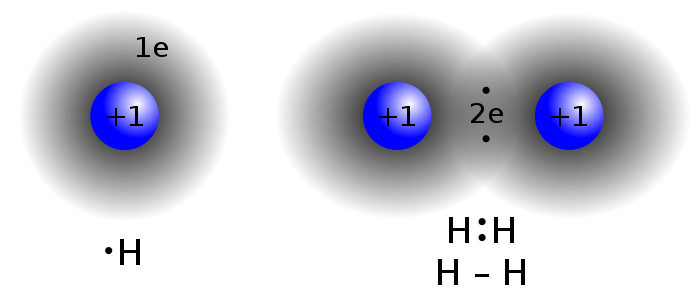
My project 2b, goal and purpose is to teach students the chemical bonds between atoms in molecules such as H2, CH4, NH3, H2 CCH2, N2, Cl2 and many large biological molecules are covalent. A covalent bond is a chemical bond that is the sharing of pairs of electrons between atoms. It is also described as attraction to repulsion stability between atoms when they share electrons. The covalent bonds between atoms is occur when one atom needs to borrow from another in order to have a full valence shell. The full valence shell allows atoms to be stable. When it is unstable, many unfortunate things may occur. To watch a video of a covalent bond, click here.
Examples:
H2: This bond shows two hydrogen atoms forming a covalent bond because they both contain 1 electron. They both need 2 electron in order to form a full valence shell.
CH4: This lewis dot structure shows four 1 atom hydrogens and one carbon atom containing four electrons which also need to become stable. These 5 atoms make each other stable.

NH3:
NH3 shows two electrons on top that are already paired the remaining 3 electrons on the nitrogen atom.

Tuesday, May 4, 2010

Bending Glass With Fire!!

Today, I bent glass using fire although the glass is a solid. The tricks to doing this are:
  • Let your glass tube set inside a bunsen burner flame for a while.
  • Turn your tube around evenly until the glass becomes soft using a metal tong and rubber holder
  • Be sure to hold glass with either a rubber holder or a metal tong.
  • As it reaches a certain heat, you can slowly bend the glass without breaking it.
Science: The bending of glass is due to glass being very reactant to the temperature. When heated, glass starts to sag into its plastic phase. This is called gravity sag bending. Control is through the pattern of temperature distribution across the sheet.

Photo Credit: Chantel Yip

Tuesday, April 20, 2010

IPropose We Make Rock Candy

IPropose We Make Rock Candy


Links:
Materials:
  • 3 cups sugar
  • 1 cup of water
  • clean glass jar
  • cotton string
  • pencil or knife
  • food coloring (optional)
  • 1/2 tsp to 1tsp flavoring oil or extract (optional)
  • pan
  • stove or microwave
Procedure:

  1. First pour the sugar and water into a pan
  2. Next, heat the mixture. Stir constantly until it reaches a boil. Do not go any lower or further than boiling.
  3. Stir until the sugar has fully dissolved. Stir until the solution has no more specks of sugar and is fully dissolved. Food color or flavoring can be added, but note that any acid flavoring may slow down crystal formation.
  4. Move the pot into the refrigerator to cool. The temperature you should aim to reach is 50°F. This makes it so that the chances of the sugar dissolving on your string slimmer because the cooling of the mixture makes the sugar more soluble.
  5. Prepare your cotton string by tying it to a pencil or object that can rest on top of the clean jar. Do not let string touch sides or bottom of pot.
  6. Pour solution into the jar and then, place your cotton string back into the jar.
  7. Cover the jar with a paper towel or coffee filter to keep solution clean but also allowing air flow.
  8. Your crystals will form within 3-7 days.
Safety Precautions
  • Wear Safety Goggles while boiling solution.
  • Do not touch the pan or mixture at any given time.
Scientific Principles
  • Solids melt at higher temperatures.
  • When a heated liquid cools, it then becomes a solid.

Wednesday, March 24, 2010

David Webb and the Vacuum


Yesterday in chemistry class, Mr. Olson brought a very interesting man by the name of David Webb. I must say I honestly learned more in that day than in many days of chemistry. He is a very entertaining man teaching us through visuals and volunteers. He introduced atmosphere of earth and pressure to us by teaching us the basic information on it. He showed us cool examples of vacuuming out all the air in a closed area, and the things that follow after such as the growing marshmellow or even the way a vibrating noise will stop if theres no air molecules that get pushed around.

Minute to Win It

There is a new show on nbc called a minute to win it. There are many fun activities that you must complete in order to win one million dollars. You must complete ten simple household games with three lives. There is a large variety of games such as dont blow the joker, balls in a hat, ping pong balls, etc. For more information or more games, click here.

node outlet


I can guarantee that everyone reading this blog has been frustrated with not having enough space to fit an outlet. With this new invention,that will not be a problem. Click here for more pics.

Friday, March 19, 2010

H202 powered helicopter

The fixed motor that usually powers the helicopter to drive blades has been replaced by a rocket powered helicopter using hydrogen peroxide to power it. It can last for 50 minutes and can go at a maximum speed of 40 mph. Watch the Video!

Thursday, March 4, 2010

rainbow rose!


During the process of the growth of the rose, dye was added to the stem to create this beautiful masterpiece.

Friday, February 12, 2010

Future of Sending Mail


From now on dont even write your address, just get the new envelope which is made by google.com to show where you are from

Kisses as Disc Holders?


Amazing! An amazing improvisation to make hershey kisses design. I think its extremely creative and I would be interested in buying one!

Future of Hearing Aids


I cannot believe this is the new style. It is very disturbing but it appeals to people who like gauges. A gauge which helps people hear. I think thats quite amazing!

Track and Field

I have recently just started doing track and field. I started last year and it makes me happy. Not only is it my favorite smart, it gets me in shape. Most sports, I do not like because I lose weight doing so. In track and field I do throwing. I am able to work out while doing low calorie burning work. I am able to gain weight this way.

Thursday, January 7, 2010

Like Disolves Like


Like Dissolves Like is a phrase used to show how solvents work. It is saying that water will not dissolve oil because one is non polar and one is polar. If both are polar or both are non polar.

PHONE THAT RUNS ON COKE?


This phone is invented by Nokia. It is very eco friendly because it takes the carbohydrates from the cokes and converts it into energy to fuel this phone.