Sunday, May 16, 2010

Toothpick in Balloon.


This past week I managed to put a toothpick in a water balloon without popping it. The trick to accomplish this is by:


  • First, fill a balloon with water.
  • Apply petroleum jelly along the top of the balloon where it is relatively thicker.
  • Get a very pointy toothpick
  • Push the tip of the toothpick into the lubricated area of the balloon. As you push slowly, also spin slowly until you eventually get the toothpick in
Science: Balloons are made of latex rubber. It is a very loose chain of cross-linked polymers. The toothpick can go through the lubricated balloon without it popping because of its unique structure.

Rock CANDAYYY!

This past week I made rock candy. The tricks to making this is:
  • First pour the sugar and water into a pan
  • Next, heat the mixture. Stir constantly until it reaches a boil. Do not go any lower or further than boiling.
  • Stir until the sugar has fully dissolved. Stir until the solution has no more specks of sugar and is fully dissolved. Food color or flavoring can be added, but note that any acid flavoring may slow down crystal formation.
  • Move the pot into the refrigerator to cool. The temperature you should aim to reach is 50°F. This makes it so that the chances of the sugar dissolving on your string slimmer because the cooling of the mixture makes the sugar more soluble.
  • Prepare your cotton string by tying it to a pencil or object that can rest on top of the clean jar. Do not let string touch sides or bottom of pot.
  • Pour solution into the jar and then, place your cotton string back into the jar.
  • Cover the jar with a paper towel or coffee filter to keep solution clean but also allowing air flow.
  • Your crystals will form within 3-7 days.
Science: Sugar does not only have a solid form. When melted, sugar becomes a liquid. When you dip your string into the solution of sugar and water. It will soon solidify around the string forming crystals. These crystals give it the appearance that it is rock candy!

Saturday, May 15, 2010

California Chemistry Standard

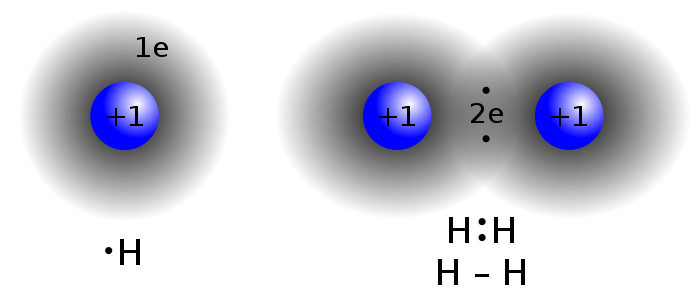
My project 2b, goal and purpose is to teach students the chemical bonds between atoms in molecules such as H2, CH4, NH3, H2 CCH2, N2, Cl2 and many large biological molecules are covalent. A covalent bond is a chemical bond that is the sharing of pairs of electrons between atoms. It is also described as attraction to repulsion stability between atoms when they share electrons. The covalent bonds between atoms is occur when one atom needs to borrow from another in order to have a full valence shell. The full valence shell allows atoms to be stable. When it is unstable, many unfortunate things may occur. To watch a video of a covalent bond, click here.
Examples:
H2: This bond shows two hydrogen atoms forming a covalent bond because they both contain 1 electron. They both need 2 electron in order to form a full valence shell.
CH4: This lewis dot structure shows four 1 atom hydrogens and one carbon atom containing four electrons which also need to become stable. These 5 atoms make each other stable.

NH3:
NH3 shows two electrons on top that are already paired the remaining 3 electrons on the nitrogen atom.

Tuesday, May 4, 2010

Bending Glass With Fire!!

Today, I bent glass using fire although the glass is a solid. The tricks to doing this are:
  • Let your glass tube set inside a bunsen burner flame for a while.
  • Turn your tube around evenly until the glass becomes soft using a metal tong and rubber holder
  • Be sure to hold glass with either a rubber holder or a metal tong.
  • As it reaches a certain heat, you can slowly bend the glass without breaking it.
Science: The bending of glass is due to glass being very reactant to the temperature. When heated, glass starts to sag into its plastic phase. This is called gravity sag bending. Control is through the pattern of temperature distribution across the sheet.

Photo Credit: Chantel Yip